
Every organization that has run its own phone system has a version of the same story. One person knows how to program the switch; that person takes a week off, a department moves offices; and the eight phones that need to follow them sit and wait until Monday.
Nobody did anything wrong. That was the deal when the core of your phone system lived in a closet in your building: you hired for it, kept a vendor on contract for the day a card failed, and learned to think in drive times. For twenty years it was good planning, which is exactly why it is such a hard habit to put down.
So when a cloud phone system comes up, the first question is rarely whether the phones will work. It is who takes care of this now, and whether anyone will actually show up.
The short version: three groups share the work. The provider runs and patches the core platform, your team handles everyday changes in a web portal, and your partner covers design, larger projects, and the call you make when something breaks. Most of it happens remotely, and you no longer need a phone specialist on staff to keep things healthy.
Cloud phone system support, by the numbers
A quick definition first. A PBX, or private branch exchange, is the traditional setup, with its core equipment in your building, while a cloud phone system, usually called UCaaS or Unified Communications as a Service, runs that core in the provider's data centers. The desk phones can look identical, but the work behind them is a different job entirely, and the service queue is where you see it.
Aaron Lee, CEO of Maverick Networks, watches that queue across hundreds of systems:
"Ninety to ninety-five percent of our service tickets are legacy on-premises systems. Cloud is about five percent. A lot of it is self-service now. The customer goes in and makes the change themselves."
That number is easy to misread, so it is worth saying plainly. The work did not vanish; it got sorted, and what disappeared is the version where all of it landed on one person in your building.
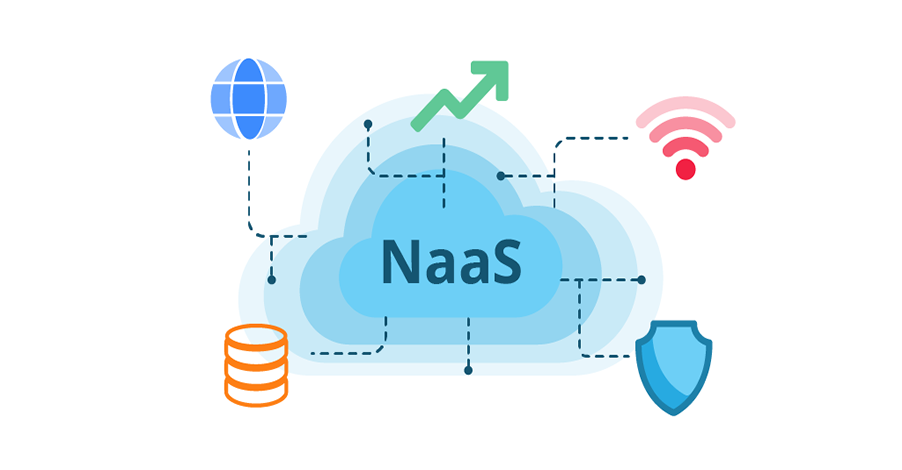
It now splits three ways, and your team only owns one of them. The provider runs the core, meaning the data centers, the servers, and every update and security patch you used to schedule yourself.
Your team handles the day-to-day, adding and removing users, adjusting call routing, and keeping E911 location data current. Your partner covers everything in between, which means design decisions, larger projects, the first call when something breaks, and pushing a ticket along when it stalls with the provider.
That third layer is the one people forget to ask about, and it usually separates a system that takes care of itself from one that quietly becomes your problem again. Across the requests that actually come up, the difference looks like this:
| What comes up | In your building | In the cloud, and who handles it |
| Moving six phones | A ticket to the one specialist | A portal change in minutes, by any assigned administrator |
| Changing a call flow | Specialized programming | Your team for edits, your partner for redesigns |
| Patches and updates | Your team schedules, tests, applies | The provider, on its own schedule |
| Hardware failing | Find a part, dispatch a technician, wait | No core hardware to fail, and a faulty phone swaps out in minutes |
| Something breaking at 7 a.m. | Call the one person who knows | One call to your partner, who takes it from there |
| Opening a new site | Equipment, wiring, programming on site | Configured remotely with your partner |
Does support have to be local anymore?
It does not, and this is where the old instinct is hardest to shake. Nobody is driving out to the closet because there is nothing in the closet to drive to, and a change that once meant scheduling a site visit is now a login that an engineer two time zones away can finish within the hour.
This feels wrong for about a week and then feels obvious, mostly because you have already made the same trade everywhere else. Your email does not run on a server in your building, and neither does payroll. Voice was simply the last holdout, kept alive by hardware that worked just well enough to justify one more year.
The question that usually follows is about hardware, and there is very little of it left. Plenty of people skip desk phones altogether and work from a softphone, which is the phone app on their computer, paired with a headset.
Where you do want desk phones, the ones ordered through the supplier arrive already configured, so they get unboxed and plugged in, and the occasional older handset you carry over might need an update first.
Having someone on site for cutover day or for staff who prefer in-person training is something you can ask for, not something the project depends on.
How long does a cloud phone deployment take?
Weeks to a couple of months, where the same project used to take a year or more. The gap is wide enough that it usually stops the conversation:
"Two years to deploy an 8,000-phone on-premises solution. We did an 8,000-user cloud deployment this summer in 60 days. Sixty days versus two years."
Aaron Lee, CEO, Maverick Networks
The reason is unglamorous. Installing a PBX meant ordering hardware, racking servers, pulling wire, and programming every site one at a time, and a cloud deployment skips nearly all of that.
The calendar goes to planning, procurement, and number porting instead, which is the work of moving your existing numbers to the new provider. Smaller organizations move faster still, and Santa Barbara City College finished in about six weeks.
Speed like that is not your team doing more work in less time. It is your team doing less of the work. Chris Miller, the network specialist who led the college's move, was direct about where it came from:
"They did a lot of work for us; I couldn't have done it without them. I didn't have a large telecom team, and Maverick made it manageable."

Do you still need a PBX specialist on staff?
No, and that matters more than it sounds, because the role has always been hard to hire for and harder to hold onto. The expertise did not disappear. It moved somewhere you can reach it without carrying it on your payroll.
The training tells the story. Administering a PBX meant multi-day classroom courses and years of experience on one specific platform, while cloud providers give administrator training away, some of it in sessions that run about an hour.
Designing a contact center still rewards real depth, which is exactly what a partner is for, but adding a user does not.
There is also simply less to look after. Most staff at Santa Barbara City College moved to softphones, which are phone apps on a computer or mobile device, and desk phones stayed only where they were genuinely needed, dropping the phone count from more than a thousand to about four hundred.
Chris Miller, who ran the old system for twenty years, says there is no backend programming left at all now, and that it freed up a great deal of his time.

What to plan for before you move
An honest picture includes the tradeoffs, and none of them are yours to solve alone. Your internet connection carries more weight than it used to, so a backup circuit and failover options are worth designing in early for departments that cannot miss a call.\
You stop doing the patching, which also means you stop choosing when updates land. Emergency calls have to reach the right address, so your E911 records need to match where each phone physically is.
That changes as people switch desks or work from home, so make it someone's job to keep it current. And support quality varies widely between providers, so response times and escalation paths deserve the same scrutiny as features and price.
All of which comes back to one question worth asking before you sign anything: what actually happens on a Tuesday when something breaks?
You are listening for a named contact, a clear escalation path, straight talk during an outage, and regular check-ins that show you real data. A login and a phone number are not an answer.
The part nobody expects
The best description of life after a move came from David Seabury, Director of IT at the El Dorado County Office of Education, whose old system had reached the point where it could not be patched without replacing every handset:
"I'm no longer worried about my phone system anymore. Period."
That is the real change. The phones matter less than the fact that nobody has to lie awake wondering about them.
If you are weighing a move and want a clear picture of what support would look like for your organization, talk to an expert.