
.png)
AI-generated voice fraud is targeting contact centers across every sector. Here are the controls that actually stop it and the questions to ask before you sign a UCaaS or CCaaS contract.
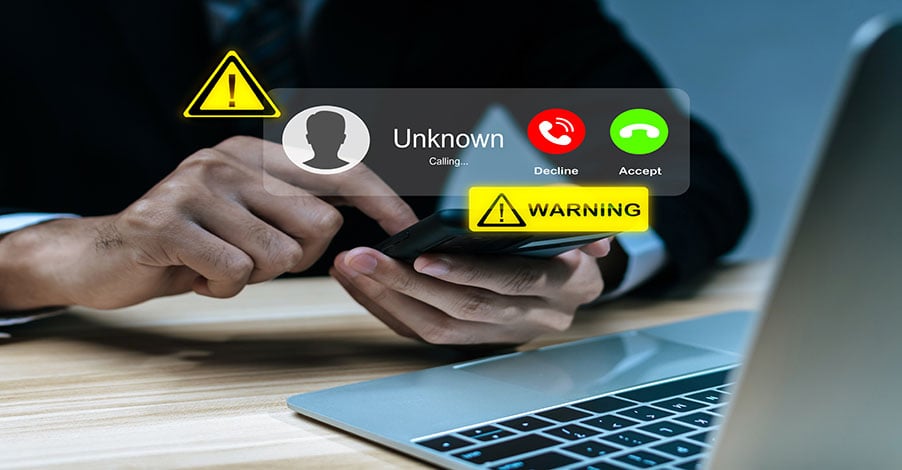
A caller phones a service line. The voice is calm, familiar, and confident. It sounds exactly like a real account holder, because it is built from a few seconds of that person's real audio. The caller knows just enough to seem legitimate and asks the agent to reset access or update a contact number. The agent, trying to be helpful, says yes. Days later, the real person finds out their account was taken over by a voice they never used.
That scenario is no longer hypothetical. Synthetic voice fraud has moved from the lab into everyday call queues, and contact centers are a prime target. In this post, you will learn what voice cloning actually is, why it is hitting service lines now, the layered controls that hold up against it, and the specific questions to ask any provider before you commit.
What AI voice cloning actually is
Voice cloning, sometimes called a voice deepfake, uses artificial intelligence to copy a real person's voice from a short sample. The result can read any script in that person's tone, accent, and cadence. Pair it with a spoofed caller ID, which is a faked number on the display, and a fraudster can sound like a trusted person calling from a trusted number.
The takeaway for any contact center is simple. The sound of a voice is no longer proof of who is calling.
Contact center fraud controls that actually work
No single tool solves this. The agencies and businesses staying ahead of it use layers, so that beating one check still runs into another.
-
Treat the voice as a name tag, not a key. A voice can identify who someone claims to be. It cannot prove it. Build your process so the voice alone never unlocks anything sensitive.
-
Add a second factor that is hard to fake. A one-time passcode sent to a number already on file, a callback to a registered device, or an in-app confirmation all raise the bar far higher than knowledge questions.
-
Watch for risk signals. Spoofed caller ID, calls from unexpected locations, or a request to change contact details right before moving money or access are patterns worth flagging automatically.
-
Put guardrails on high-risk actions. Account recovery, banking or payment changes, and redirecting benefits or refunds should trigger step-up verification, which means an extra layer of proof, or a second set of eyes.
-
Equip and protect your agents. Give them clear scripts, permission to slow down, and a fast path to escalate. An agent who is rewarded for speed alone will get rushed into mistakes. An agent who is allowed to verify will catch fraud.
What UCaaS and CCaaS providers are doing about it
The encouraging news is that the major communications platforms are taking this seriously, and their defenses are improving quickly. The pattern across the industry is consistent: rather than build synthetic-voice detection from scratch, the big providers are embedding specialist voice-security technology directly into their contact center platforms.
A couple of recent examples:
-
Zoom expanded its work with voice-security firm Pindrop in early 2026 to bring real-time deepfake detection into Zoom Contact Center. The goal is to verify callers and flag synthetic audio in the moment, across the whole journey from the automated menu to a live agent, instead of treating fraud review as a separate step afterward. Zoom has also added deepfake risk detection inside meetings.
-
RingCentral has published its own research on the threat, with a survey finding that 72 percent of respondents believe their company could be targeted by AI-generated voice or video fraud within a year. It offers fraud detection through voice-pattern analysis that flags suspicious calls for extra verification, along with voice authentication delivered through specialist partners in its contact center.
Notice the common thread. These tools analyze far more than the audio itself. They look at call metadata, device signals, network risk, and behavior patterns to catch an impersonation that sounds perfect to the human ear.
Two cautions, because this is where a supplier-neutral view earns its keep:
-
These capabilities are often add-ons or partner integrations, not features that are simply on by default. Confirm what is included in your plan and what costs extra.
-
No detection tool is perfect, and the technology on both sides keeps evolving. Treat vendor detection as one strong layer, not the whole defense. Your process, your verification steps, and your trained agents still matter

What to ask any UCaaS or CCaaS provider about voice
fraud
When you evaluate a platform, the marketing will promise security. Your job is to make it specific. Useful questions include:
- How do you detect spoofed or synthetic audio, and what happens when you do?
- What multi-factor and step-up verification options are built in, and can we set rules by action type?
- What fraud signals and analytics do supervisors actually see in real time?
- How does verification stay consistent across voice, chat, and text, so fraud cannot simply switch channels?
- If voice biometrics are involved, how is that voice data stored, protected, and aligned with privacy and compliance requirements?
The right answers are concrete and demonstrable. Vague reassurance is a signal to keep asking.
The verification tradeoff to manage
More verification adds friction, and friction frustrates legitimate callers. The way through is risk-based step-up. Low-risk requests stay quick and easy, while high-risk actions ask for more. That keeps everyday service smooth and reserves the extra effort for the moments that warrant it.
Next steps
Start by listing the actions in your contact center that could cause real harm if the wrong person triggered them. Then check what stands between a caller and each of those actions today. If the only thing in the way is a voice and a few easy-to-find details, you have found your first gap to close.
This is a problem of process and platform working together, and it is far easier to solve before an incident than after one. If you want a second set of eyes on where your voice and contact center verification stands, talk to an expert. We help organizations evaluate the right options without pressure and without pushing any single vendor.


.webp)